


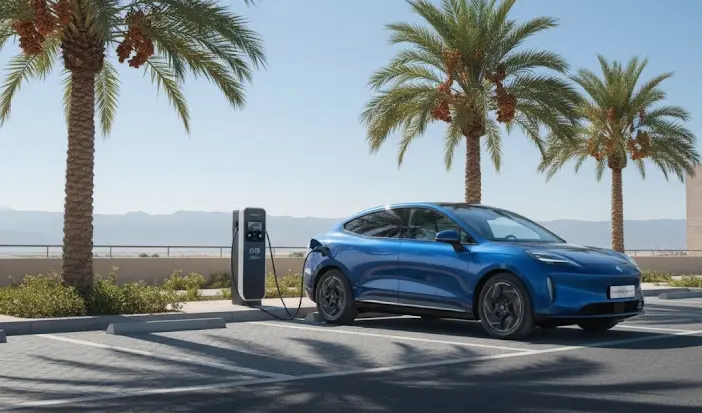
As the world accelerates toward decarbonization and the Middle East countries have started transformation, Kuwait is beginning to steer in the same direction, toward sustainable transportation and cleaner energy to balance economic growth with environmental responsibility.
This transition reflects a changing social mindset in Kuwait, where more citizens, especially younger generations, are advocating for cleaner air, smarter cities, and greener mobility.
Against this backdrop, electric vehicles (EVs) are gaining traction as a symbol of progress. They represent not only technological advancement but also a practical step toward reducing Kuwait’s carbon footprint. In this article, we explore how EV adoption contributes to Kuwait’s environmental progress and how automakers like GAC Kuwait are supporting this transformation.
Kuwait’s Policy Shift Toward Clean Energy and Market Response
In recent years, Kuwait’s government has begun to translate environmental awareness into concrete policies aimed at reducing fossil-fuel dependence and promoting renewable energy. Although the country remains an oil powerhouse, its leadership recognises that long-term energy resilience depends on diversification and decarbonization.
Government Vision and Strategic Targets
Under “Kuwait Vision 2035 – New Kuwait”, the nation aims to transform its energy system through efficiency and diversification. The National Renewable Energy Program, supervised by the Kuwait Institute for Scientific Research (KISR) and the Ministry of Electricity, Water and Renewable Energy (MEWRE), targets 15% renewable power generation by 2030.
Projects like the Shagaya Renewable Energy Park already serve as flagships — combining solar PV, concentrated solar power (CSP), and wind energy, capable of supplying over 150 MW of clean electricity. In 2024, the government confirmed expansion plans that would scale this capacity to 2 GW by the early 2030s, positioning Kuwait as a regional renewable hub.
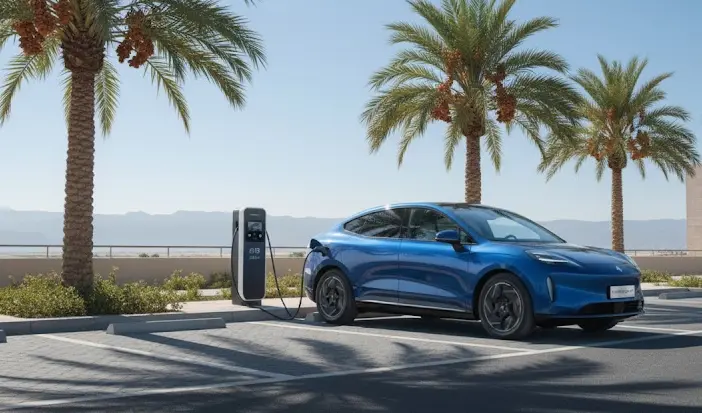
Alongside generation, the government is revising energy-efficiency codes for buildings and transport. The Kuwait National Adaptation Plan (NAP 2023) emphasises sustainable mobility, waste-to-energy projects, and support for electric vehicle (EV) infrastructure — including incentives for private investment in charging stations.
How Electric Vehicles Support Environmental Protection
EVs stand at the forefront of Kuwait’s path toward environmental improvement.
Zero Tailpipe Emissions
Unlike traditional combustion vehicles, EVs produce no tailpipe emissions. This directly reduces the levels of nitrogen oxides, carbon monoxide, and particulate matter in the air—pollutants that contribute to respiratory diseases and urban smog. For Kuwait’s densely populated urban areas, the widespread adoption of EVs can significantly enhance air quality.
Superior Energy Efficiency
Electric vehicles convert over 80% of the electrical energy from the grid to power the wheels, compared to internal combustion engines, which only convert about 20% of gasoline’s energy into motion. This higher efficiency means less energy wasted, reducing Kuwait’s overall energy demand in the long term.
Integration with Renewable Energy
As Kuwait invests in renewable energy—such as solar power projects under its “Kuwait Vision 2035”—EVs can be charged using clean electricity. This synergy ensures that the environmental benefits of EVs extend throughout their lifecycle, supporting a sustainable energy ecosystem.
Supporting National Climate Goals
EV adoption aligns with Kuwait’s pledge to reduce greenhouse gas emissions and diversify its energy mix. By decreasing dependence on fossil fuels, electric mobility becomes a key enabler in Kuwait’s pursuit of carbon neutrality and environmental resilience.
GAC’s Contribution to Kuwait’s Green Mobility Future
GAC, one of China’s leading EV automakers, has taken an active role in promoting green mobility solutions across the Middle East. In Kuwait, GAC’s upcoming electric vehicles—such as the HYPTEC HT—reflects our commitment to both performance and sustainability.
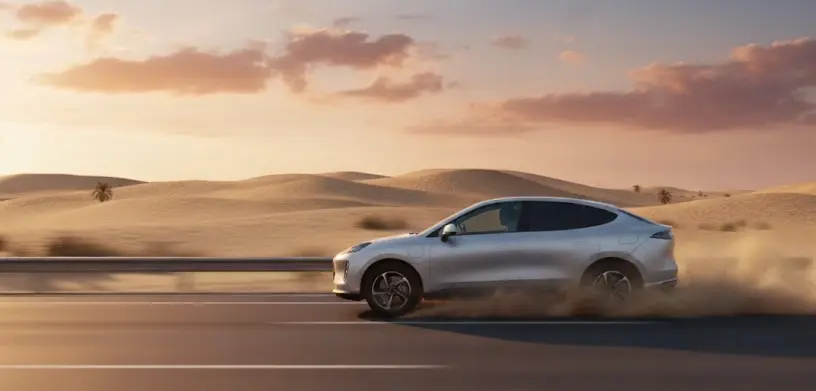
GAC’s EVs utilise GAC’s patented Magazine Battery 2.0 technology, designed for enhanced safety and temperature resistance up to 1,400°C, ensuring reliability in Kuwait’s extreme climate.
In the future, GAC will bring HYPTEC vehicles to Kuwait, which are all pure electric vehicles, upgrading the Kuwait EV market to the next level. The HYPTEC HT, with a range of up to 600 km, deliver not just emission-free driving but also energy efficiency and long-distance capability ideal for local and intercity travel.
For more information about HYPTEC HT, please pay attenion to our latest news on GAC Kuwait!
Conclusion
Kuwait’s journey toward environmental sustainability is gaining momentum, and electric vehicles are becoming a powerful catalyst in this evolution. With supportive policies and the actions to achieve the Vision, Kuwait is going to be a cleaner and more resilient future. With EVs like HYPTEC HT in the future, GAC is bringing high-performance, environmentally responsible models to the market, accelerating the steady “swifting to the current” of global green mobility.
As technology, policy, and consumer awareness align, Kuwait’s roads may soon reflect not just motion—but meaningful progress toward a sustainable tomorrow.